Overview
FitTrack is a personal fitness companion we designed and built as a product. It is for people who train regularly, or want to start, and need one simple place to log workouts and see whether they are improving. It runs on Android and iOS from a single codebase.
The Challenge
Fitness apps stand or fall on motivation. Most people begin with enthusiasm and stop when logging becomes tedious or progress stops feeling visible. The app had to make recording a session quick enough to do straight after training, convert those entries into something encouraging, and look good enough that people return daily instead of feeling they are filling in a spreadsheet.
Who Uses It and How
A gym-goer logs exercises between sets, or a runner records a session on the walk home. A beginner mostly wants to see that showing up is counting, which is where streaks matter. A more experienced trainee looks back at earlier weeks to check whether lifts or durations are moving in the right direction. A coach or trainer role could later be given access to a client's history, which the API structure allows for.
Our Approach
We built the product around a loop: log, see progress, keep going. Logging is short, because friction there breaks the loop. Progress insights translate raw entries into a picture of improvement, and streaks give a gentle reason to come back tomorrow.
The look is clean and upbeat, with clear type and generous spacing so figures stay readable on a phone in a busy gym. Flutter delivers identical behaviour on both platforms, Firebase covers accounts and data, and a REST API keeps the data reachable for later integrations.
What We Built
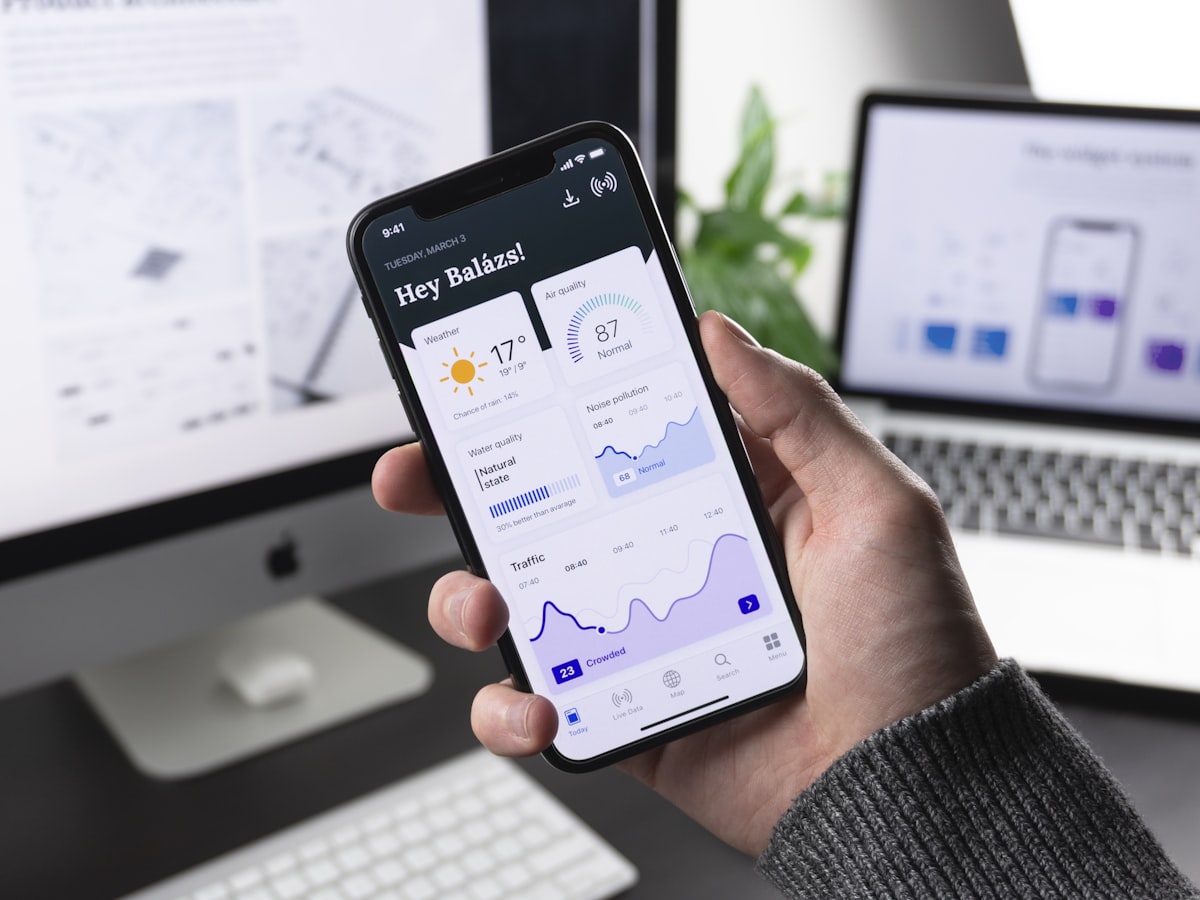
The app centres on workout tracking: sessions are recorded and stored against the account. From that history it builds progress views, and a streak indicator rewards consecutive activity. The home screen shows the latest workout, current standing and a suggested next step. Firebase synchronises everything to the account, so a new phone does not mean lost history.
Architecture and Data
Entities are the user, workout sessions, exercises within a session, sets or durations, and derived measures such as weekly totals and streak length. Streaks are computed from dates of activity, taking care over the user's local time zone so a late-night session lands on the right day. Progress charts read from stored history and are rendered on the device. The REST API layer offers a boundary for connecting health platforms on the phone, wearables or a web dashboard, without restructuring the app. Reminder notifications can support consistency.
Security, Privacy and Quality
Workout logs can reveal health and lifestyle information, so they sit behind authentication and access rules that limit each record to its owner. If body measurements or health platform data are added, users should be asked for consent for each type and be able to delete their data. The app offers tracking, not medical or training advice. Testing covers streak edge cases such as travel across time zones and missed days, chart accuracy, offline logging that syncs later, and performance on older phones.
Technology
Flutter's rendering model suits charts and progress visuals that must stay smooth across devices. Firebase removes the need to run our own authentication and database from day one, and the REST API leaves room to connect coaching tools or a web dashboard.
Outcome
FitTrack provides a dependable daily companion that is fast to use, clear about progress and designed to encourage consistency. Its codebase can grow into features such as training plans or social challenges.
Frequently asked questions
How much does it cost to build a fitness tracking app?
Cost depends on features such as workout libraries, video demonstrations, wearable and health platform integrations, social or coaching features, subscriptions and the amount of analytics. A core logging app with progress views is far smaller than a full training platform with content and coaching.
Can a fitness app connect to Apple Health or Google Fit?
Yes, apps can read and write workout and activity data through the phone's health platforms after the user grants permission. It requires separate work for each platform and careful consent handling.
How do fitness apps calculate workout streaks?
They count consecutive days, or weeks, that contain at least one logged activity, using the user's local time zone. Good implementations decide up front how to treat rest days so streaks feel fair rather than punishing.
Highlights
- Workout tracking with progress insights and streaks
- Cross-platform Android and iOS app from one codebase
- Clean, motivating interface designed for daily gym use
- Cloud-synced workout history through Firebase
- REST API ready for wearables and future integrations